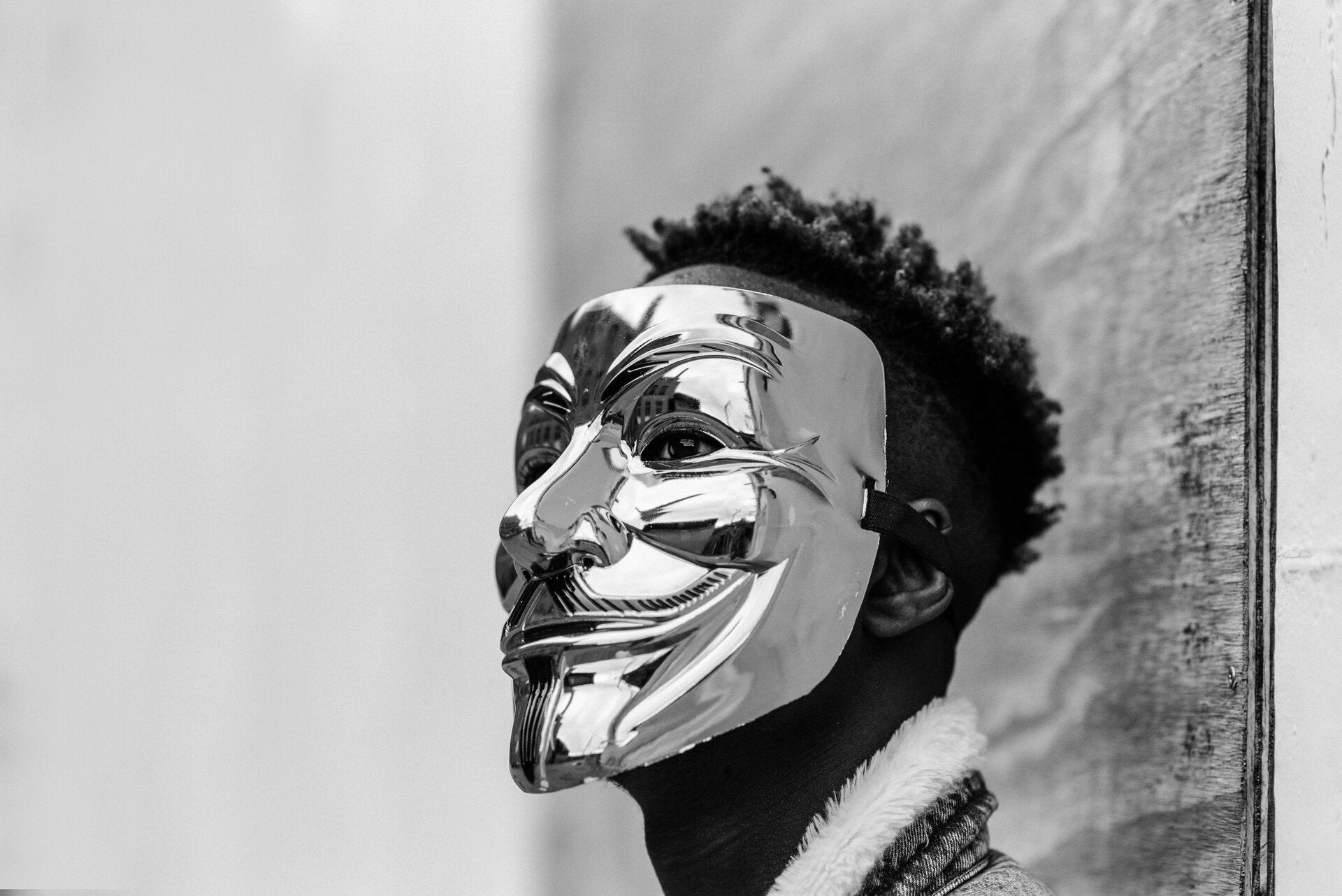
People come and go. We meet them at school, at work, on a team, in a street, at a stage of life that happens to match theirs, and for a while we call them friends. We trade stories and laughs and shared complaints, and we feel the warmth of belonging. Then the job ends, or the house moves, or the circumstances shift, and they drift out of our lives as easily as they arrived. In my view, that’s a reason to use the word friendship loosely. Not because the connection wasn’t real, but because most of the time we weren’t meeting each other. We were meeting personas: the agreeable one, the funny one, the capable one, the one who has it all together, each polished to fit the room. Two masks can get along beautifully, and often do, but they can’t know each other. So when someone leaves, it’s worth asking what actually went, and whether we ever really met in the first place.
My friendships have been vast, but only a handful ever stuck. And when I look at how they began, it’s easier to see why. At school, your friends are simply the children born in the same year as you, placed under one roof and sorted into the same class. Nobody asks who you are or who you’d choose. You pick the closest match from whoever happens to be there, and a friendship grows from proximity more than from knowing each other. Parents and teachers shape it further, quietly approving of some friends and steering you away from others, so even who you keep and who you leave behind is influenced by adults with their own ideas about what’s suitable.
University is the same pattern with a bigger stage. Another group of strangers is thrown together, all of them still working out who they are, and again we choose our nearest fit and try to blend and build something together. We want to belong, so we adjust. We laugh at the right jokes, share the right opinions, and wear whatever version of ourselves earns us a place at the table. Always the mask, always fitting in, always playing a role. In my view, it’s hard to build something solid between two people who are each performing, and harder still when neither of them knows who they are underneath. A friendship built on the persona lasts only as long as the persona does, which may be why so many fall away when the classroom, the campus, or the job changes. The few that stuck were the ones where, at some point, the mask slipped, and we were both still there.
Once the mask is built, we guard it fiercely. We cling to the beliefs, opinions, and ideals we borrowed, and we defend our sense of right and wrong as though our lives depended on it, because on some level it feels like they do. So when a friend begins to change, to question what they were taught, to step outside the roles we’ve both been playing, it doesn’t feel like growth. It feels like a threat. We roll our eyes, make a joke, remind them who they used to be. We tell ourselves we’re being protective, but is that what it is? Or is it fear: the fear of being left behind, of being less, of having our own fragile ego exposed by someone else’s courage? Underneath the friendship, the comparison is still running, and a friend who grows quietly becomes a competitor in a race we never agreed to enter. So we hold them in place, and ourselves with them, because if they stay the same, we never have to ask whether we should change too.
I have rarely let anyone close. After a childhood where closeness came with a price, keeping a safe distance became second nature, and it has protected me. It has also left me alienated, standing at the edge of rooms I could have been part of, watching others belong. I understand the trade, because most of us make one. We sacrifice pieces of who we are just to belong: we soften an opinion, swallow a question, and laugh along. I’ve seen what happens when someone stops. When Covid arrived and I spoke against the grain, I watched people leave. I’m not here to argue the rights and wrongs of that period. My point is what it showed me, which is how quickly many friendships can’t survive a disagreement, and how much of what we called closeness depended on seeing the world the same way.
Underneath, there’s an internal battle most of us never name. We want to be better than the people around us, not equal to them, and that quiet competition feeds jealousy, comparison, and the fear that someone else’s gain is our loss. Add the fear of abandonment, and we cling, control, and hold each other in place, because if they change, they might leave. In my view, that’s why so many friendships turn out to be toxic: not because anyone is cruel, but because they leave no room for growth, curiosity, or change. The friendships that last are rare, and they’re the ones where each person can become more themselves without the other feeling smaller for it.
Humans are so fragile. Many believe they can treat you however they choose and that you should stay quiet and submissive while they do. Then the moment you challenge their views, question their behaviour, or point out the hurt they’ve caused, they change. Some retreat into silence, deflect, or disappear altogether. Others attack, turning on you with a ferocity that has nothing to do with what you said and everything to do with what it threatened. In my view, it’s rarely about you. A challenge feels like an attack on the mask, and a fragile ego will defend itself the way a cornered animal does, by running or by biting. What we’re told is the other person’s anger or withdrawal is often fear in disguise. But it teaches the rest of us a lesson: speak up and you’ll be punished, stay small and you’ll be kept. Many of us learn it so well that we spend years swallowing our hurt just to keep the peace, mistaking silence for friendship and calling the result closeness.
Some of us build entire lives around our friendship circles. We please, we accommodate, we become whoever the group needs, and sometimes, without admitting it, we start to play one person against another, passing a little information here and a little reassurance there, to hold some control over the world we’ve built. It rarely feels like manipulation from the inside. It feels like survival, like keeping ourselves needed and keeping the group together so that we’re never left standing outside it.
There is no doubt that some friendships last for decades. But is any of it really real when we ourselves are mimics? The way we speak, the opinions we defend, the humour we share, the things we call right and wrong: how much of it did we choose, and how much did we copy from the people who raised us, from the rules and regulations of society, from the dynamics of the system we were born into? If two people are both running borrowed scripts, they may get along beautifully for forty years and never once meet. They know each other’s routines, each other’s stories, each other’s favourite lines, and call that intimacy. So here’s the question I keep coming back to: if you took away the mask, the script, and the role you play in your circle, who would still be sitting at the table? And would they still recognise you?
A lot of people surround themselves with friends for a reason they would rarely admit: it keeps them from being alone with themselves. A full calendar is a good distraction. There is always someone to talk to, somewhere to be, and a noise loud enough to drown out the quiet question of who we are underneath. So we cling to each other through life’s ups and downs, and we stay in dynamics that drain us, with people who criticise, compete, or only call when they need something, because leaving feels like being cast out. Belonging, even a painful kind, feels safer than solitude.
And the system rewards it. We’re taught from the start that friendship means popularity, that a big circle is a sign of success, and that the person who stands apart has something wrong with them. The ones who are different, who refuse to belong, who prefer peace over chaos and would rather be real than be whatever someone else wants them to be, are treated as strange, cold, or difficult. In my view, that’s no accident of human nature. It’s what happens when a culture values fitting in more than knowing yourself. But there’s a difference between loneliness and solitude, and between belonging to a group and belonging to yourself. Some of us have paid for being real with a smaller circle. I would say it was worth the price, because a few honest connections can hold more than a hundred performed ones.
It is my belief that the smaller your circle, the more real you are. We’re told friendships form naturally around common ground: the same likes and dislikes, the same hobbies and interests, the same schools, habits, and careers. It sounds harmless, even beautiful. But look closer and it’s mirroring. We gravitate towards people who reflect us back, who confirm our opinions and share our routines, and we call that connection. In my view, it’s a trap, because it’s all built on the mask. Two people who match on the surface can spend decades together without either one meeting the real person underneath, because the friendship was never built on who they are. It was built on what they have in common.
Here’s the part most of us never stop to look at: we didn’t choose nearly as much as we think we did. Teams are thrown together. A class is assembled by birth year and postcode. An office is filled by whoever got hired in the same window, and nobody asks whether the people at the next desk are people you’d ever pick. You don’t choose your colleagues. You don’t choose the group you were placed in at school, or the flat you moved into, or the team you joined at a particular time in your life. And then, because we’re social creatures who need to belong, we make the best of whoever is there, and we call it friendship.
Go one step further and the same is true of the friends we believe we selected. We chose them from a very small pool, defined by where we were, when we were there, and who happened to be standing nearby. In my view, that makes most relationships orchestrated, arranged by circumstance, timing, and the structures we move through, long before we get to say yes. And the easier a relationship comes, the more worth questioning it is. Ease often means we match on the surface, wear the same mask, and ask nothing of each other. So ask yourself: if you could choose from everyone alive, knowing exactly who you are, would these be the people? Or did you simply make a home with whoever was in the room?
Let's take it one step further and I’d ask you to answer honestly, because nobody else is listening. Do you really care about the friends in your life, or is it simply the time you’ve put in together? If you hadn’t met at that school, that job, or that stage of life, would you choose them now? Do they truly reflect who you are, or who you’ve been pretending to be? Do they bring out your best, or do they give you comfort and a good reason to stand still? When did one of them last challenge you, and what did you do? And if you changed tomorrow, if you questioned everything and became someone they hadn’t met, how many of them would still be standing next to you? The answer may be uncomfortable. It may also be the most honest thing you learn this year. If you, like me, have a lot of acquaintances and very few friends then maybe you're more real and more free than society would like you to believe.
Create Your Own Website With Webador